 . The formation of chromium(V) and thiyl radical in these reactions can proceed as outlined in Equations
 4. Electron Paramagnetic Resonance Study of the Reaction of Chromium(VI) with Reducing Agents in the Presence of a Spin-Trap
The reduction of chromium(VI) by the thiols discussed in Chapter 3 resulted in chromium(V) formation, and in the case of
b-mercaptoethanol, DMPO was used to detect thiyl radical intermediates formed during the reactions. In the studies discussed below, DMPO was used to detect any radical intermediates formed during the reduction of chromium(VI) by other reducing agents, i.e., cysteine, cysteamine, ethanethiol, propanethiol, dimercaptosuccinic acid (DMSA), glutathione, and ascorbic acid (Figure 4-1).4.1. Spin Trapping
Many radical species, such as hydroxyl radical (•OH) and thiyl radical (•SR), are quite reactive, and thus are typically only transient species, making their detection difficult on the EPR time-scale. DMPO (Figure 4-2) is a diamagnetic compound, and as such it is EPR silent. When reactive radical species are formed in the presence of DMPO, they are trapped by this "spin-trap", forming stable paramagnetic nitroxyl radical adducts (Figure 4-2), which are now EPR active. The radical signal observed in the EPR spectrum is split due to superhyperfine interactions between the nuclear spins of the N and
b-H atoms and the unpaired electron of the nitroxide radical (aN and aH, Figure 4-2). The 14N nucleus splits the signal into three lines (I = 1), and these lines are in turn each split into two lines by the 1H nucleus (I = 1/2). This results in a six-line spectrum (Figure 4-2, example A). The hyperfine splitting constants, a, are dependent upon the radical species trapped by DMPO, and thus the DMPO-radical adduct signal observed in the EPR spectrum can be used to determine the radical species formed during the reaction of interest. For example, the thiyl radical (RS•) reacts with DMPO to form the DMPO-SR radical adduct. The aN and aH values for such adducts are typically not equal, and Figure 4-2-A shows the six-line EPR signal observed for the DMPO-SR radical adduct when aN = 15.2 and aH = 17.1 G. Hydroxyl radical (•OH) on the other hand, results in a DMPO-OH radical adduct in which the aN and aH values are equal, and Figure 4-2-B shows the four-line EPR signal observed for the DMPO-OH radical adduct when aN = aH = 14.9 G. One problem often encountered in such studies is that both hydroxyl radical and thiyl radical are formed during the reactions of interest. Both of these species will be trapped by DMPO, and it is often difficult to extract accurate a-values from the resulting EPR spectra. Figure 4-2-C shows the EPR spectrum observed when equal amounts of thiyl and hydroxyl radical are trapped by DMPO. In such cases computer programs are often used to simulate the spectra, and a-values can thus be determined, as well as values for the relative amounts of radical species formed during the course of the reaction. One such computer program, SpinSim, was used extensively in these studies, and a listing of the program is found in the Appendix.4.2. Results and Discussion
4.2.1. Cysteine
The reaction of potassium dichromate (20.0 mM chromium(VI)) with cysteine (60.0 mM) (1:3 Cr:thiol ratio) at pH 7.0 (100 mM Tris-HCl buffer) and 25 °C in the presence of 5,5-dimethyl-1-pyrroline-N-oxide (DMPO) (100 mM) resulted in an immediate color change from orange to green upon mixing (indicating reduction of chromium(VI) to chromium(III)), and no signal was observed in the EPR spectrum. Reducing the temperature of the reaction to -15 °C had no noticeable effect on the reaction rate, and no signal was observed in the EPR spectrum. The reaction of chromium(VI) (1.8 mM) with cysteine (5.45 mM) at pH 7.0 and 25 °C also resulted in no signal in the EPR spectrum.
The reaction of chromium(VI) (20.0 mM) with cysteine (20.0 mM) at pH 7.0 (100 mM Tris-HCl buffer) in the presence of DMPO at 25 °C (1:1 Cr:thiol ratio) resulted in a slower color change from yellow to orange to orange-brown within 1.5 minutes, but no signal was observed in the EPR spectrum. It was thought that ethylenediamine may chelate any chromium(V) species formed, thus stabilizing them enough to detect chromium(V) in the EPR spectra (66, 67). The above reaction was repeated in the presence of 20 mM ethylenediamine, and again no signal was observed in the EPR spectrum, however, the color change of the reaction was accelerated, and the solution was brown within 1 minute of mixing. The reaction of chromium(VI) (5.0 mM) with cysteine (5.0 mM) at pH 7.0 in a cacodylic acid buffer system (100 mM) in the presence of DMPO at 25 °C (1:1 Cr:thiol ratio) resulted in no observable color change, and a very low intensity signal in the EPR spectrum indicative of the DMPO-OH radical adduct (g = 2.008; a
H = aN = 14.9 G) (Figure 4-3). When the concentration of chromium(VI) and cysteine in this reaction was increased to 20 mM each, an immediate color change from yellow to green was observed, and no signal was observed in the EPR spectrum.4.2.1.1. Discussion
The reduction of chromium(VI) by cysteine was discussed in Chapter 3 (3.1.4), and at the low chromium(VI) concentration used in that study (0.48 mM), at most only 0.5% chromium(V) formation was observed. It was thought that increasing the chromium(VI) concentration would allow for the observation of greater amounts of chromium(V), thus allowing further characterization of any species formed. The time-course for the formation and decay of chromium(V) species discussed in section 3.1.4 indicated that at high cysteine:Cr ratios any chromium(V) formed would rapidly decay. Thus, in this study, the chromium(VI) concentration was initially increased to 20.0 mM, and the cysteine concentration was increased to 60 mM (3:1 cysteine:Cr ratio), in 100.0 mM Tris-HCl, pH 7.0 at 25 °C in the presence of 100.0 mM DMPO, and the reaction followed by EPR spectroscopy at 297 K. Under these conditions, the formation of chromium(V) was not observed; the formation of chromium(III) species occurred upon addition of thiol to a solution of chromium(VI). Decreasing the temperature of the reaction to -15 °C again resulted in the formation of chromium(III) upon addition of cysteine. Decreasing the concentrations of chromium(VI) (1.8 mM) and cysteine (5.45 mM; 3:1 cysteine:Cr ratio) and performing the reactions at 25 °C again resulted in no detectable chromium(V) formation and formation of chromium(III) upon addition of cysteine.
It was thought that lowering the cysteine:Cr ratio to 1:1 would slow the formation of chromium(III), and allow for detection of chromium(V). The reduction of chromium(VI) (20.0 mM) to chromium(III) by cysteine (20.0 mM) in 100 mM Tris-HCl, pH 7.0 at 25 °C was slower than that observed at higher cysteine:Cr ratios, but was still complete within 1 minute, and no chromium(V) was detected in the EPR spectrum.
The buffer system used in the above studies (100.0 mM Tris-HCl, pH 7.0) was changed to a cacodylic acid system (100.0 mM, pH 7.0) to ascertain whether the buffer salts had an effect on the reaction. When chromium(VI) (5.0 mM) was reacted with cysteine (5.0 mM; 1:1 cysteine:Cr ratio) in the presence of DMPO (100.0 mM) in a cacodylic acid system (100.0 mM) at pH 7.0 and 25 °C, no chromium(V) was detected in the EPR spectrum, but a small 4-line EPR signal attributed to the DMPO-OH radical adduct (a
H = aN = 14.9 G) (Figure 4-3) was observed. Increasing the chromium(VI) and cysteine concentrations to 20.0 mM in this system resulted in no observable chromium(V) EPR signal, and loss of the DMPO-OH signal.Since cysteine is a 1-electron reducing agent, the reduction of chromium(VI) by cysteine must proceed through a chromium(V) intermediate. However, the overall rate of the chromium(VI)
Æ chromium(III) reaction is quite fast, and it has been shown that cysteine is one of the most effective chromium(VI) reducing agents among many low-molecular weight reducing agents (21). Under the reaction conditions employed in these studies any chromium(V) formed immediately decays to chromium(IV) and chromium(III) species, thus chromium(V) is not detectable in the EPR spectra. The presence of hydroxyl radical in the cacodylate buffer system with chromium(VI) concentration of 5.0 mM is intriguing, as the cystine radical anion was detected in the previous studies (Section 3.1.4). In the presence of molecular oxygen, the cystine radical anion can generate superoxide (Equation [4-1]). Superoxide can then dismutate into hydrogen peroxide (Equation [4-2]) (68). Hydrogen peroxide, in turn, can react with any chromium(V) complexes formed to produce hydroxyl radical in a reaction mechanism similar to the iron-catalyzed Fenton reaction (Equation [4-3]):RSSR•
- + O2 Æ RSSR + O2•- [4-1]2O
2•- + 2H+ Æ H2O2 + O2 [4-2]Cr(V) + H
2O2 Æ Cr(VI) + •OH + OH- [4-3]Thus, the generation of hydroxyl radical is possible in these reactions, and is dependent on the formation of chromium(V). All buffers were treated with ion-exchange resin to remove iron and other metal impurities prior to reactions, so Fe
2+ is not the source of hydroxyl radicals. The very low levels of hydroxyl radicals found in not surprising, as the reduction of chromium(VI) to chromium(III) is too rapid to allow the detection of any chromium(V).In summary, under the reaction conditions employed, i.e., chromium(VI) concentrations in the 1.8-20.0 mM range and either 1:1 or 3:1 cysteine:Cr ratios, the reduction of chromium(VI) to chromium(III) occurred too rapidly to allow the detection of any chromium(V) intermediates. In one case (5.0 mM chromium(VI)), a small amount of hydroxyl radical was formed, however, no chromium(V) was observed. A mechanism for the formation of hydroxyl radical is proposed that implicates the cystine radical anion and chromium(V) intermediates.
4.2.2. Cysteamine
The reaction of potassium dichromate (20.0 mM chromium(VI)) with cysteamine (60.0 mM) (1:3 Cr:thiol ratio) at pH 7.0 (100 mM Tris-HCl buffer) and 25 °C in the presence of 5,5-dimethyl-1-pyrroline-N-oxide (DMPO) (100 mM) resulted in an immediate color change from orange to brown-green upon mixing (indicating reduction of chromium(VI) to chromium(III)), and no signal was observed in the EPR spectrum. Reducing the temperature of the reaction to -15 °C had no noticeable effect on the reaction rate, and no signal was observed in the EPR spectrum. The reaction of chromium(VI) (1.8 mM) with cysteamine (5.45 mM) at pH 7.0 and 25 °C resulted in a signal in the EPR spectrum indicative of the DMPO-OH radical adduct (g= 2.008; a
H = aN = 14.9 G) (Figure 4-4).The reaction of chromium(VI) (20.0 mM) with cysteamine (20.0 mM) at pH 7.0 (100 mM Tris-HCl buffer) in the presence of DMPO at 25 °C (1:1 Cr:thiol ratio) resulted in a slower color change from yellow to orange to orange-brown within 5 minutes, and a signal in the EPR spectrum indicative of the DMPO-OH radical adduct (g= 2.007; a
H = aN = 14.9 G) (Figure 4-5). A very low-intensity chromium(V) EPR signal was also observed at g = 1.982. This reaction was repeated in the presence of 20 mM ethylenediamine (to chelate any chromium(V) formed and thus stabilize it) (66, 67), and no change in the EPR spectrum or color change was observed.The reaction of chromium(VI) (20.0 mM) with cysteamine (60.0 mM) at pH 7.0 (100 mM Cacodylic acid buffer) in the presence of DMPO at 25 °C (1:3 Cr:thiol ratio) resulted in an immediate color change from yellow to green upon mixing, and no signal was observed in the EPR spectrum. No signal and immediate color change to green was also observed when the cysteamine concentration was reduced to 20, 10, or 5 mM.
4.2.2.1. Discussion
The reaction of chromium(VI) (20.0 mM) and cysteamine (60.0 mM, 3:1 cysteamine:Cr ratio), in 100 mM Tris-HCl, pH 7.0 at 25 °C in the presence of 100 mM DMPO was followed by EPR spectroscopy at 297 K. Under these conditions, the formation of chromium(V) was not observed; the formation of chromium(III) species occurred upon addition of cysteamine to a solution of chromium(VI). Decreasing the temperature of the reaction to -15 °C again resulted in the formation of chromium(III) upon addition of cysteamine. Decreasing the concentrations of chromium(VI) (1.8 mM) and cysteamine (5.45 mM; 3:1 cysteine:Cr ratio) and performing the reactions at 25 °C again resulted in no detectable chromium(V) formation, however a small amount of •OH radical was formed, indicated by the small DMPO-OH radical adduct signal (g= 2.008; a
H = aN = 14.9 G) observed in the EPR spectrum (Figure 4-4). In the reaction of chromium(VI) (20.0 mM) and cysteamine (20.0 mM, 1:1 cysteamine:Cr ratio), in 100 mM Tris-HCl, pH 7.0 at 25 °C in the presence of 100 mM DMPO, a very small chromium(V) EPR signal was observed at g = 1.982, and a 4-line signal indicative of the DMPO-OH radical adduct (g= 2.007; aH = aN = 14.9 G) was observed (Figure 4-5).The reaction of chromium(VI) (20.0 mM) and cysteamine (5.0-60.0 mM, 0.2,0.5,1, or 3:1 cysteamine:Cr ratio), in 100 mM cacodylic acid, pH 7.0 at 25 °C in the presence of 100 mM DMPO, resulted in immediate formation of chromium(III) upon addition of cysteamine, and no chromium(V) or •OH radical was observed in the EPR spectra.
Since cysteamine, like cysteine, is a 1-electron reducing agent, the reduction of chromium(VI) by cysteamine must proceed through a chromium(V) intermediate. However, the overall rate of the chromium(VI)
Æ chromium(III) reaction is quite fast, and under the reaction conditions employed in these studies any chromium(V) formed immediately decays to chromium(IV) and chromium(III) species, thus only a very small chromium(V) signal at g = 1.982 was observed in the EPR spectra. The formation of hydroxyl radical in these reactions is likely to follow a mechanism analogous to that outlined for cysteine in Equations [4-1] to [4-3].In summary, under the reaction conditions employed, i.e., chromium(VI) concentrations in the 1.8-20.0 mM range and either 0.2,0.5,1 or 3:1 cysteamine:Cr ratios, the reduction of chromium(VI) to chromium(III) occurred too rapidly to allow the detection of chromium(V), except at the 1:1 cysteamine:Cr ratio. At low chromium(VI) concentration (1.8 mM, 3:1 cysteamine:Cr), or at a 1:1 cysteamine:Cr ratio, •OH radical was formed, and it is postulated that any hydroxyl radical formed is produced via a mechanism similar to the reactions involving cysteine.
4.2.3. Ethanethiol
The reaction of potassium dichromate (20.0 mM chromium(VI)) with ethanethiol (60.0 mM) at pH 7.0 (100 mM Tris-HCl buffer) in the presence of DMPO (100 mM) at 25 °C (1:3 Cr:thiol ratio) was followed via EPR spectroscopy. A chromium(V) signal was observed (g = 1.988;
DH = 1.47 G), as well as a six-line signal indicative of a DMPO-SR thiyl radical adduct (g = 2.008; aH = 17.5, aN = 15.2 G) (Figure 4-6). Increasing the concentration of chromium(VI) (100 mM) and ethanethiol (300 mM) in the absence of DMPO led to the observation of 3 signals in the EPR spectrum at g = 1.988 (major) and g = 1.997, 1.973 (minor) (Figure 4-6). To determine the effect of buffer on the g-value of the chromium(V) signals observed, the reaction of chromium(VI) (20.0 mM) with ethanethiol (60.0 mM) at pH 7.0 in 100 mM cacodylic acid buffer in the presence of DMPO at 25 °C (1:3 Cr:thiol ratio) was followed via EPR spectroscopy. Four chromium(V) signals were observed (g = 1.988, DH = 1.61 G (major); g = 1.975, g = 1.996 g = 1.979 (minor)), as well as a six-line signal indicative of a DMPO-SR thiyl radical adduct (g = 2.008; aH = 17.6, aN = 15.2 G) (Figure 4-6). When this reaction was done in the absence of DMPO, the same 4 signals were observed in the EPR spectrum (Figure 4-6). The reaction of chromium(VI) (20.0 mM) with ethanethiol (60.0 mM) at pH 7.0 in unbuffered aqueous solution in the presence or absence of DMPO at 25 °C (1:3 Cr:thiol ratio) was followed via EPR spectroscopy. Three chromium(V) signals were observed in the absence of DMPO (g = 1.988, DH = 1.61 G (major); g = 1.976, g = 1.979 (minor)) (Figure 4-6). These three signals were also observed in the presence of DMPO, but at a lower intensity. Also, in this unbuffered solution, no detectable DMPO-SR radical adducts were observed (Figure 4-6). Whether in the presence or absence of DMPO, the EPR signals observed in unbuffered solution were approximately 5-fold less intense than those observed in buffered solution.4.2.3.1. Discussion
The reaction of chromium(VI) (20.0 mM) with ethanethiol (60.0 mM) in the presence of DMPO (100.0 mM) resulted in the formation of a chromium(V) species (g = 1.988), and a DMPO-radical adduct indicative of the thiyl radical (a
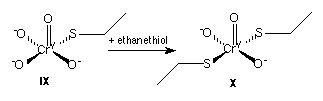
H = 17.5, aN = 15.2 G). When DMPO was not present in the reaction, and the concentration of chromium(VI) and ethanethiol was increased 5-fold, three signals were observed in the EPR spectrum (g = 1.988, g = 1.997, and g = 1.973). The buffer system employed in these studies had no significant effect on the g-values of the chromium(V) species formed, as the major signal at g = 1.988 and minor signal at g = 1.975 was observed in reactions performed in Tris-HCl, cacodylic acid, or unbuffered aqueous solution. Thus, the chromium(V) species formed in these reactions can be attributed to ethanethiol-chromium(V) complexes. The presence of both g = 1.975 and g = 1.988 signals is consistent with the formation of an initial mono-(ethanethiol)chromium(V) complex (g = 1.975) (IX) and subsequent formation of a bis-(ethanethiol)chromium(V) complex (g = 1.988) (X). Aiyar has also proposed the structure (X) and assigned it to a bis-(ethanethiol)chromium(V) complex (48):. The formation of chromium(V) and thiyl radical in these reactions can proceed as outlined in Equations
4.2.4. Propanethiol
The reaction of chromium(VI) (100.0 mM) with propanethiol (300.0 mM) at pH 7.0 (100 mM Tris-HCl buffer) at 25 °C (1:3 Cr:thiol ratio) was followed via EPR spectroscopy. A low-intensity chromium(V) signal was observed at g = 1.988;
DH = 1.66 G), which was observed to decrease further in intensity within 5 minutes of the start of reaction (Figure 4-7). A color change was also observed, from yellow to dark red, upon addition of thiol to the solution.The reaction of chromium(VI) (20.0 mM) with propanethiol (20.0 mM) at pH 7.0 (100 mM cacodylic acid buffer) in the presence of DMPO (100 mM) at 25 °C (1:1 Cr:thiol ratio) was followed via EPR spectroscopy. A chromium(V) signal was observed (g = 1.988;
DH = 1.61 G), as well as a six-line signal indicative of a DMPO-SR thiyl radical adduct (g = 2.008; aH = 17.3, aN = 15.2 G) (Figure 4-7). Increasing the concentration of propanethiol (60 mM) resulted in much more DMPO-SR thiyl radical adduct (g = 2.008; aH = 17.6, aN = 15.2 G) formation, as well as the observation of 3 chromium(V) signals in the EPR spectrum (g = 1.988, DH = 1.46 G (major); g = 1.980, g = 1.975 (minor)) (Figure 4-7).4.2.4.1. Discussion
The reaction of chromium(VI) (20.0 mM) with propanethiol (60.0 mM) in 100.0 mM cacodylic acid buffer in the presence of DMPO (100.0 mM) (Figure 4-7) resulted in the formation of 3 chromium(V) species (g = 1.988, g = 1.980, and g = 1.975), and a DMPO-radical adduct indicative of the thiyl radical (a
H = 17.6, aN = 15.2 G). At a lower propanethiol:Cr ratio (1:1) under the same conditions, only the g = 1.988 chromium(V) signal could be detected, and the same DMPO-thiyl radical signal was observed. Increasing the chromium(V) and thiol concentrations 5-fold, in the absence of DPMO, (and in Tris-HCl buffer) resulted in only the g = 1.988 signal being detected. Again, the buffer system used in these studies had no effect on the g-value of the chromium(V) species detected. As was the case for reactions involving ethanethiol, the presence of both g = 1.975 and g = 1.988 signals is consistent with the formation of an initial mono-(propanethiol)chromium(V) complex (g = 1.975) (XI) and subsequent formation of a bis-(propanethiol)chromium(V) complex (g = 1.988) (XII). Aiyar has also proposed the structure (XII) and assigned it to a bis-(propanethiol)chromium(V) complex (48):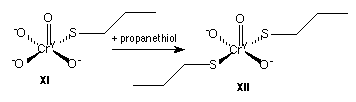 . It is not surprising that the g-values of these species are the same whether ethanethiol or propanethiol is used as the reducing agent, since the thiols used only differ in the length of the carbon chain. As was the case for ethanethiol, the formation of chromium(V) and thiyl radical in these reactions can proceed as outlined in Equations
4.2.5. Dimercaptosuccinic acid
The reaction of potassium dichromate (5.0 mM chromium(VI)) with dimercaptosuccinic acid (7.5 mM) at pH 7.0 (100 mM Tris-HCl buffer) in the presence of DMPO (100 mM) at 25 °C (1:1.5 Cr:dithiol ratio) was followed via EPR spectroscopy. Three chromium(V) signals were observed (g = 1.999,
DH = 2.15 G, 53Cra = 18.2 G; g = 1.993; g = 1.986) (Figure 4-8), as well as a multi-line signal indicative of a DMPO radical adduct. Direct analysis of the DMPO adduct formed is hindered due to overlap by the intense chromium(V) signal at g = 1.999 (Figure 4-8). It should be noted that the intensity of the chromium(V) signals observed was greatly influenced by the presence of the spin-trap, DMPO. The signal at g = 1.999 increased by a factor of 3.2, while the signal at g = 1.993 decreased by a factor of 2.5 in the presence of DMPO. The signal at g = 1.986 was only observed in the presence of DMPO (Figure 4-8). When this reaction was repeated in 100 mM cacodylate buffer instead of Tris-HCl under identical conditions, three chromium(V) signals were again observed (g = 1.999, DH = 2.05 G; g = 1.993, DH = 2.34; g = 1.989, DH = 2.34) (Figure 4-8). The intensity of all signals observed increased by a factor of 2 in the presence of DMPO (Figure 4-8). It should also be noted that the overall intensity of the observed signals was much less than that observed for the reactions done in Tris-HCl buffer. When the concentration of chromium(VI) and thiol was increased 10 times (50 mM chromium(VI) and 75 mM thiol), three signals were again observed (g = 1.999, DH = 2.05 G; g = 1.993, DH = 2.34; g = 1.986, DH = 1.90) (Figure 4-8). Again, the intensity of the observed signals was greater in the presence of DMPO (Figure 4-8). The reaction of chromium(VI) (5.0 mM) with dimercaptosuccinic acid (7.5 mM) at pH 7.0 (H2O solution) in the presence or absence of DMPO (100 mM) at 25 °C (1:1.5 Cr:dithiol ratio) resulted in the formation of three chromium(V) signals (g = 1.999, DH = 2.05 G; g = 1.993, DH = 1.76; g = 1.986, DH = 1.9) (Figure 4-8). Again, the intensity of the observed signals was greater in the presence of DMPO (Figure 4-8).The reaction of chromium(VI) (100 mM) with dimercaptosuccinic acid (300 mM) at pH 7.0 (100 mM Tris-HCl buffer) at 25 °C (1:3 Cr:dithiol ratio) resulted in the observation of three chromium(V) signals (g = 2.000,
DH = 2.2 G, g = 1.993, DH = 2.5 G; g = 1.986) Figure 4-8).4.2.5.1. Discussion
The reaction of chromium(VI) (5.0 mM) with dimercaptosuccinic acid (7.5 mM; 3 reducing equivalents) in Tris-HCl buffer (100.0 mM; pH 7.0) resulted in three chromium(V) signals in the EPR spectrum (g = 1.999, g = 1.993, g = 1.986) (Figure 4-8), as well as a multi-line signal indicative of a DMPO radical adduct. Increasing the chromium(VI) and dimercaptosuccinic acid concentrations 20-fold (100.0 mM chromium(VI)) resulted in the observation of the same three chromium(V) signals in the EPR spectrum, however the relative intensities of the signals changed. At the higher chromium(VI) concentration, the g = 1.999 signal was the major signal, while at the lower chromium(VI) concentration, the g = 1.993 and 1.999 signals were of approximately equal intensity. The presence of DMPO in these reactions also changes the relative intensities of the chromium(V) signals observed. When DMPO (100.0 mM) was present in the reactions with 5.0 mM chromium(VI), the chromium(V) signal at g = 1.999 was the major signal, and the overall intensities of the chromium(V) signals were increased relative to reactions done in the absence of DMPO. In reactions performed in unbuffered aqueous solution (5.0 mM chromium(VI)), the g = 1.999 signal was the major signal both in the presence or absence of DMPO; the presence of DMPO in these reactions served to increase the overall intensities of the chromium(V) signals observed.
The reaction of chromium(VI) (5.0 mM) with dimercaptosuccinic acid (7.5 mM; 3 reducing equivalents) in cacodylic acid buffer (100.0 mM, pH 7.0) also resulted in three chromium(V) EPR signals (g = 1.999, g = 1.993, and g = 1.989), however in this system the overall chromium(V) signal intensity was very low, and the g = 1.989 signal was of equal intensity to the g = 1.993 signal; the g = 1.999 signal was a minor signal. The presence of DMPO in these reactions did not change the relative intensities of the chromium(V) signals, however the overall chromium(V) signal intensity was slightly increased. When the chromium(VI) and dimercaptosuccinic acid concentrations were increased 10-fold (50.0 mM chromium(VI)) in the absence of DMPO, the overall chromium(V) signal intensity increased dramatically, and the g = 1.993 signal was dominant. The presence of DMPO in this reaction dramatically increased overall chromium(V) signal intensity, and the g = 1.999 signal became dominant.
Although the g-values of the chromium(V) signals observed in the EPR spectra did not change significantly when the buffering system was changed from Tris-HCl to cacodylic acid, the intensities of the signals were significantly lower in the cacodylic acid system. This discrepancy is most likely due to the reaction of dimercaptosuccinic acid with cacodylic acid prior to initiation of the reaction with chromium(VI). Jacobson and Murphy (69) have shown that cacodylic acid can react with thiols, thus depleting the amount of free thiol available for reactions. The rate of reaction of cacodylic acid with thiols is significant at high cacodylic acid:thiol ratios; at the 100.0:7.5 ratio of cacodylic acid:dimercaptosuccinic acid used in some of these studies, up to 50% of the thiol may react with cacodylic acid within 15 minutes (69). At the 100.0:75.0 ratio of cacodylic acid:dimercaptosuccinic acid used in some of these studies, less than 20% of the thiol would be depleted over the same time-period. Thus, it is not surprising that low chromium(V) signal intensities were observed for the reactions of chromium(VI) (5.0 mM) with dimercaptosuccinic acid (7.5 mM) in 100.0 cacodylic acid buffer. The available thiol in these reactions would be much less than stoichiometric at the initiation of the reactions, thus the chromium(V) signal intensities would be lower, and the favored chromium(V) species would be different than that found in either Tris-HCl or unbuffered aqueous solutions. However, when chromium(VI) and dimercaptosuccinic acid concentrations are increased 20-fold, the amount of available thiol would be much higher, and the signals observed would more closely follow those observed in Tris-HCl or unbuffered aqueous solutions.
When the dimercaptosuccinic acid:Cr ratio is increased from 1.5:1 to 3:1 (3 and 6 reducing equivalents, respectively) in Tris-HCl and in the absence of DMPO, the relative intensities of the g = 1.999 and g = 1.993 EPR signals observed change. At the higher thiol:Cr ratio the g = 1.999 EPR signal is dominant. This is consistent with the initial formation of a mono-(dimercaptosuccinic acid)chromium(V) complex (g = 1.993) (XIII), and subsequent formation of a bis-(dimercaptosuccinic acid)chromium(V) complex (g = 1.999) (XIV):
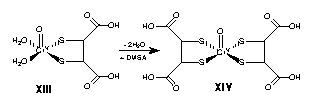 . The presence of DMPO in these reactions serves to increase the overall intensity of the chromium(V) signals observed, and also favors the formation of the g = 1.999 species over the g = 1.993 signal. Since a radical species is trapped by DMPO in these reactions, it is probable that the effective removal of this radical species by formation of a DMPO-radical adduct serves to favor the production of the g = 1.999 species (XIV).
In summary, the reaction of chromium(VI) with dimercaptosuccinic acid results in the formation of two main chromium(V) species, with g-values of 1.993 and 1.999. These species have been assigned to a mono-(dimercaptosuccinic acid)chromium(V) complex (XIII) and a bis-(dimercaptosuccinic acid)chromium(V) complex (XIV), respectively. It has been shown that the buffer system used in these studies does not effect the g-values observed. However, the cacodylic acid buffer system must be used with caution, as cacodylic acid can react with thiols, thus depleting the amount of available thiol in the reaction mixture. It has also been shown that a radical species is formed in significant amounts in these reactions. Removal of this radical species by formation of a DMPO-radical adduct serves to favor the formation of the bis-(dimercaptosuccinic acid)chromium(V) complex (XIV) over the mono-(dimercaptosuccinic acid)chromium(V) complex (XIII), and also increases the overall chromium(V) EPR signal intensities observed.
4.2.6. Glutathione
The reaction of chromium(VI) (40.0 mM) with various concentrations of glutathione (40.0-400.0 mM) at pH 7.0 (100 mM Tris-HCl buffer) at 25 °C (1:1-1:10 Cr:thiol ratio) was followed via EPR spectroscopy. Two main chromium(V) signals were observed (g = 1.987,
DH = 2.7 G; g = 1.998, DH = 4.1 G) (Figure 4-9). The relative intensities of these two signals was dependent on the glutathione concentration used. At the lowest Cr:thiol ratio, 1:1, the g = 1.987 signal was of greater intensity than the g = 1.998 signal (Figure 4-9). As the concentration of glutathione was increased in subsequent reactions, the g = 1.998 signal became the major signal. At a 1:10 ratio of Cr:thiol, the g = 1.987 is of very low intensity (Figure 4-9). The inset to Figure 4-9 shows an expanded view of the spectrum observed at the 1:2 Cr:thiol ratio, and it is possible to observe hyperfine structure in the spectrum; a53Cr = 8.4 G (attributed to the g = 1.987 signal). The inset also shows the presence of two very low-intensity chromium(V) signals at g = 1.975 and g = 1.970. It is interesting to note that a feature at g = 1.984 is observed when the signal at g = 1.998 is intense.4.2.6.1. Discussion
The reaction of chromium(VI) (40.0 mM) with glutathione (1-10:1 glutathione:Cr ratios) in Tris-HCl (100.0 mM) at pH 7.0 and 25 °C resulted in the formation of two main chromium(V) EPR signals (g = 1.998, g = 1.987). The dominant species in these reactions (based on signal intensities) is highly dependent on the glutathione:Cr ratio. At low ratios, the g = 1.987 signal is dominant, and as the glutathione:Cr ratio is increased, the g = 1.998 signal becomes dominant (Figure 4-9. This is consistent with reaction mechanism for the formation of chromium(V) species that involves an initial mono-(glutathione)chromium(V) complex (g = 1.987) (V) and subsequent formation of a bis-(glutathione)chromium(V) complex (g = 1.998) (VI). In a similar study performed at 8-fold lower chromium(VI) concentrations, Aiyar (48) attributed the g = 1.987 signal to a bis-(glutathione)chromium(V) complex (VI), and implicated a third glutathione molecule present through an RS-Cr bond opposite the axial Cr=O bond (VIa). The present study, however, showed a significant amount of (g = 1.998) signal even at a 1:1 or 2:1 glutathione:Cr ratio; hence it is more likely that the g = 1.987 signal is due to structure (V), and the g = 1.998 signal is due to structure (VI) (Chapter 3). The g = 1.984 signal is present at high glutathione:Cr ratios, and it may be due to a complex of oxidized glutathione with chromium(V).
Goodgame and Joy have reported (70) similar results for the reaction of chromium(VI) (30.0 mM) with glutathione (1-10:1 glutathione:Cr ratio) in unbuffered aqueous solution, pH 7.0. The present studies confirm those of Goodgame and Joy, and also show that the presence of Tris-HCl buffer (100.0 mM) does not significantly change the g-values or relative intensities of the EPR signals observed in these reactions.
4.2.7. Ascorbic Acid
The reaction of chromium(VI) (20.0 mM) with ascorbic acid (20.0 mM) at pH 7.0 (100 mM cacodylic acid buffer) in the presence of DMPO (100 mM) at 25 °C (1:1 Cr:ascorbate ratio) was followed via EPR spectroscopy. Two intense signals corresponding to the ascorbate radical were observed (g = 2.007; g = 2.006) (Figure 4-10), as well as a multi-line signal indicative of a DMPO-radical adduct. A very low-intensity chromium(V) signal was detected (g = 1.980). Direct analysis of the DMPO-radical adduct(s) formed in this reaction is difficult, so computer simulation techniques were used to analyze the spectra. Figure 4-11 shows the results of the simulations (using the program SpinSim; see appendix). The middle spectrum is the experimental spectrum in the presence of DMPO, with the ascorbate radical signal removed by normalized subtraction of the signal obtained in the absence of DMPO. The top trace in Figure 4-11 shows the result obtained when a 1:0.7 mixture of two radicals (carbon-centered, a
N = 15.98, aH = 23.03; •CO2-, aN = 15.83, aH = 19.04) is simulated. The bottom trace in Figure 4-11 shows the result obtained when a small amount of oxidized DMPO signal is added to the top trace. The addition of this oxidized DMPO signal allows for a more complete match to the experimental spectrum (center trace). It is clear from these data that the reduction of chromium(VI) by ascorbate results in the formation of numerous radicals originating from the oxidation of both ascorbate and the spin-trap employed.4.2.7.1. Discussion
Goodgame and Joy have reported (20) studies of the reaction of chromium(VI) with ascorbate at various ascorbate:Cr ratios (1:2 to 5:1) at various pH values (7.0-8.5) in unbuffered and Tris-HCl or HEPES (4-(2-hydroxyethyl)-1-piperazineethanesulfonic acid) buffered aqueous solutions. They have reported that at neutral pH equimolar concentrations of chromium(VI) and ascorbate (30.0 mM) in either unbuffered or HEPES buffered solutions result in the formation of a high-intensity chromium(V) EPR signal at g = 1.979, and no detectable ascorbate radical signal. Goodgame and Joy also found that ascorbate radical (as evidenced by an EPR signal doublet with g = 2.006 and 2.007) is produced in reactions of equimolar chromium(VI) and ascorbate only when the pH is increased to 7.5-8.0. Also, when ascorbate is in excess, no chromium(V) signal is observed, and the ascorbate radical produced results in a broader EPR doublet signal. When Tris-HCl was used as the buffer in their system, they found two chromium(V) signals in the EPR spectrum (g = 1.979, 1.976) when chromium(VI) was in excess. They have proposed that the g = 1.976 signal is either a chromium(V)/ascorbate/Tris or a chromium(V)/Tris complex.
As Goodgame and Joy have proposed that Tris is a "non-innocent" buffer (20) in the reaction of chromium(VI) with ascorbate, the present study was performed in a cacodylic acid buffer system, in an attempt to further the understanding of the effect of buffer salts in these reactions. Also, the presence of DMPO in this study served to detect any short-lived radical intermediates formed in the reactions. The reaction of equimolar amounts of chromium(VI) (20.0 mM) and ascorbic acid in the presence or absence of DMPO (100.0 mM) in a cacodylic acid buffer system (100.0 mM) at pH 7.0 and 25 °C resulted in the formation of large amounts of ascorbate radical (g = 2.006, 2.007) and a barely detectable level of chromium(V) (g = 1.980). This is in contrast to the results of Goodgame and Joy (20), who found no ascorbate radical and large amounts of chromium(V) in analogous reactions performed in HEPES or unbuffered solutions.
The presence of DMPO in these reactions resulted in the formation of a 16-line spectrum from multiple (overlapping) DMPO-radical adduct signals. Computer simulation of the spectra using the program SpinSim (see Appendix) has shown that the best fit to the experimental data occurs when a mixture of three DMPO-radical adducts is simulated. Most of the signals are due to either a DMPO-ascorbate radical adduct or a DMPO-COO
2- radical adduct. A small amount of signal can be attributed to oxidized DMPO. Superimposed on these DMPO-radical signals is the ascorbate radical doublet, indicating that ascorbate radical is produced in high amounts in these reactions. A theoretical study by Abe et al. (71) has indicated that the oxidation of ascorbic acid involves the initial formation of ascorbate radical in neutral or basic pH. More studies are needed before a plausible reaction mechanism can be proposed, however any mechanism must allow for the initial formation of ascorbate radical in these reactions.In summary, the reaction of chromium(VI) and ascorbate is complex, and the signals observed in the EPR spectra of the reaction are dependent on the buffer system employed (if any), the pH of the solution, and the ratio of ascorbate:Cr. Numerous ascorbate-derived radical species are formed, and any mechanism for the reaction of chromium(VI) with ascorbate must involve the ascorbate radical.
4.2.8. Summary
The studies discussed in this chapter have shown that the reduction of chromium(VI) by ethanethiol, propanethiol, dimercaptosuccinic acid, glutathione, cysteine, or cysteamine typically leads to the formation of thiyl (•SR) radical, and in the cases of cysteine and cysteamine, hydroxyl (•OH) radical, as indicated by the hyperfine splitting constants of DMPO-radical adduct EPR spectra observed in these reactions. Production of chromium(V) was also observed for the thiols studied, with the exception of cysteine and cysteamine (Table 4-1). These two thiols are very effective at reducing chromium(VI) to chromium(III), and any chromium(V) species that may have been produced were quickly reduced further to EPR silent chromium(IV) or chromium(III) species. For the other thiols studied (ethanethiol, propanethiol, DMSA, or glutathione), the rate of the overall chromium(VI)
Æ chromium(III) reduction was at a slower rate than for cysteine or cysteamine, and the formation of chromium(V) was observed in the EPR spectra (Table 4-1). Reaction of ethanethiol or propanethiol with chromium(VI) resulted in the formation very similar chromium(V) species (main species at giso = 1.988; Table 4-1). The presence of DMPO in these reactions altered the relative intensities of the chromium(V) species formed, and it has been proposed that this may be due to removal of reactive radical species from the reaction sphere by DMPO. Reduction of chromium(VI) by ascorbic acid was also followed by EPR spectroscopy, and resulted in the formation of a small amount of chromium(V), as well as ascorbate radical and DMPO-radical adducts (Table 4-1).Figure 4-1. Structures of the reducing agents used in this study.
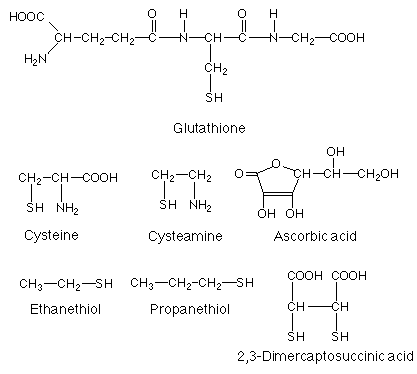
Figure 4-2. The reaction of 5,5-dimethyl-1-pyrroline-N-oxide (DMPO) (Diamagnetic), and with free radicals results in the "trapping" of the radical, forming a DMPO-R adduct (Paramagnetic), which can be observed in the EPR spectrum. (A) Six-line EPR spectrum resulting from a DMPO-SR (thiyl radical) adduct with a
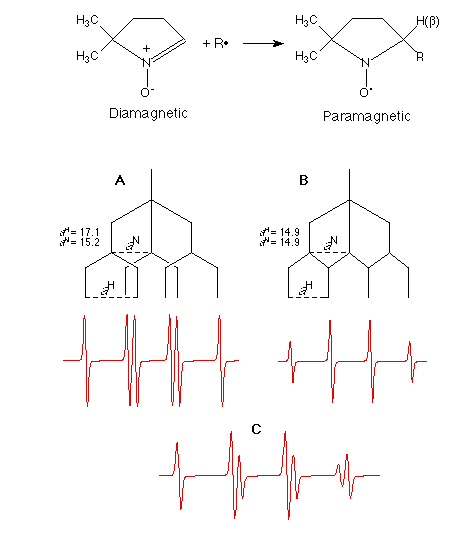
Figure 4-3. EPR spectrum of species formed upon reaction of potassium dichromate (5.0 mM chromium(VI)) with cysteine (5.0 mM; 1:1 thiol:Cr ratio) in the presence of DMPO (100 mM). All reactions were performed at 25 °C in 100 mM cacodylic acid buffer, pH 7.0. Reactions were initiated by addition of thiol, and aliquots (50 µL) of the reactions were taken at 1.25 minutes in capillary tubes and EPR spectra were obtained as described in Figure 3-7.
placeholder for Figure 4-3 cys427b
Figure 4-4. EPR spectrum of species formed upon reaction of potassium dichromate (1.8 mM chromium(VI)) with cysteamine (5.45 mM; 3:1 thiol:Cr ratio) in the presence of DMPO (100 mM). All reactions were performed at 25 °C in 100 mM Tris-HCl, pH 7.0. Reactions were initiated by addition of thiol, and aliquots (50 µL) of the reactions were taken at 1.25 minutes in capillary tubes and EPR spectra were obtained as described in Figure 3-7.
placeholder for Figure 4-4 cysteamine417
Figure 4-5. EPR spectrum of species formed upon reaction of potassium dichromate (20.0 mM chromium(VI)) with cysteamine (20.0 mM; 1:1 thiol:Cr ratio) in the presence of DMPO (100 mM). All reactions were performed at 25 °C in 100 mM Tris-HCl, pH 7.0. Reactions were initiated by addition of thiol, and aliquots (50 µL) of the reactions were taken at 1 minute in capillary tubes and EPR spectra were obtained as described in Figure 3-7.
placeholder for Figure 4-5 cysteamine428
Figure 4-
placeholder for Figure 4-6 ethane408
Figure 4-7. EPR spectra of species formed upon reaction of potassium dichromate with propanethiol in the presence or absence of DMPO (100.0 mM) (A) 100.0 mM chromium(VI), 300.0 mM propanethiol (3:1 thiol:Cr ratio) in 100.0 Tris-HCl. Spectrum collected for 2 minutes starting at 1.0 minutes. (B) 20.0 mM chromium(VI), 20.0 mM propanethiol (1:1 thiol:Cr ratio) in 100.0 cacodylic acid. Spectrum collected for 15 minutes starting at 1.0 minutes. (C) 20.0 mM chromium(VI), 60.0 mM propanethiol (3:1 thiol:Cr ratio) in 100.0 cacodylic acid. Spectra collected for 15 minutes starting at 1.0 minutes. All reactions were performed at 25 °C, pH 7.0. Reactions were initiated by addition of thiol, and aliquots (50 µL) of the reactions were taken at various times in capillary tubes and EPR spectra were obtained as described in Figure 3-7.
placeholder for Figure 4-7 propane419
Figure 4-8. EPR spectra of species formed upon reaction of potassium dichromate with dimercaptosuccinic acid in the presence or absence of DMPO (100.0 mM). (A) 5.0 mM chromium(VI), 7.5 mM dithiol (1:1.5 Cr:dithiol ratio) in 100.0 mM Tris-HCl. Spectra collected for 15 minutes starting at 1.0 minutes. (B) 5.0 mM chromium(VI), 7.5 mM dithiol (1:1.5 Cr:dithiol ratio) in 100.0 mM cacodylic acid. Spectra collected for 15 minutes starting at 1.0 minutes. (C) 50.0 mM chromium(VI), 75.0 mM dithiol (1:1.5 Cr:dithiol ratio) in 100.0 mM cacodylic acid. Spectra collected for 15 minutes starting at 1.0 minutes. (D) 5.0 mM chromium(VI), 7.5 mM dithiol (1:1.5 Cr:dithiol ratio) in nanopure water. Spectra collected for 6 minutes starting at 1.0 minutes. (E) 100.0 mM chromium(VI), 300.0 mM dithiol (1:3 Cr:dithiol ratio) in 100.0 mM Tris-HCl. Spectrum collected for 6 minutes starting at 1.0 minutes. All reactions were performed at 25 °C, pH 7.0. Reactions were initiated by addition of thiol, and aliquots (50 µL) of the reactions were taken at various times in capillary tubes and EPR spectra were obtained as described in Figure 3-7.
placeholder for Figure 4-8 dmsa418
Figure 4-9. EPR spectrum of species formed upon reaction of potassium dichromate (400.0 mM chromium(VI)) with glutathione (40.0-400.0 mM; 1:1 to 10:1 thiol:Cr ratio). All reactions were performed at 25 °C in 100 mM Tris-HCl, pH 7.0. Reactions were initiated by addition of thiol, and aliquots (50 µL) of the reactions were taken in capillary tubes and EPR spectra were collected for 6 minutes starting at 1 minute, as described in Figure 3-7.
placeholder for Figure 4-9 gsh454_458
Figure 4-10. EPR spectrum of species formed upon reaction of potassium dichromate (20.0 mM chromium(VI)) with ascorbic acid (20.0 mM; 1:1 ascorbate:Cr ratio) in the presence or absence of DMPO (100.0 mM). All reactions were performed at 25 °C in cacodylic acid buffer (100.0 mM), pH 7.0. Reactions were initiated by addition of thiol, and aliquots (50 µL) of the reactions were taken in capillary tubes at 1.0 minute and EPR spectra collected for 15 minutes as described in Figure 3-7.
placeholder for Figure 4-10
asc446
Figure 4-11. Computer simulation study of the radical species produced during the reaction of potassium dichromate (20.0 mM chromium(VI)) with ascorbic acid (20.0 mM; 1:1 ascorbate:Cr ratio) in the presence or absence of DMPO (100.0 mM). All reactions were performed as in Figure 4-10. The top trace is the computer-simulated spectrum (see program SpinSim in the appendix) of two DMPO-radical species, carbon-centered, a
placeholder for Figure 4-11
asc_sim
Table 4-1. EPR signals (297 K) observed during the reduction of chromium(VI) by various reducing agents in the presence or absence of DMPO and in Tris-HCl, cacodylic acid, or unbuffered solutions.
Placeholder for Table 4-1, page 2