1. INTRODUCTION
1.1. General
Elemental chromium is a hard, white metal quite resistant to normal corrosive media, and is often used as a protective metallic coating (1). However, elemental chromium is not found naturally; the element is named for the many colored compounds which it forms (1, 2). In nature, chromium is chiefly found in the ore chromite (FeCr
2O4), a spinel in which Cr(III) occupies octahedral and Fe(II) occupies tetrahedral sites (1). It is interesting to note that chromium, as Cr(III), is found in trace amounts in emerald and ruby and lends color to these substances. Chromium and its compounds are ubiquitous in industry, and are used in stainless steel, chrome plating, pigments, primer paints, wood preservatives, leather tanning products, magnetic recording media, synthetic gems, and many other products (2, 3). In all, the annual world consumption of chromium and its products is greater than one million tons (3).1.2. Biological Aspects of Chromium
1.2.1. Exposure
The normal (non-occupational) exposure to chromium is via food and water (4). Despite the relatively high concentration of chromium in soil, 200 ppm, most plants resist the accumulation of this element. The main chromium-rich foods are butter, animal fats, brewer's yeast, black pepper, and brown sugar (3, 4). The level of chromium in water is quite low; it is typically below 10 ppb (4). In all, the estimated daily dietary intake of chromium via such exposure is about 60
mg (4). Adults contain about 5-10 mg total body chromium (3). Chromium(III) is poorly absorbed by the body, while chromium(VI) is readily absorbed. The main routes of exposure are the lungs, gastrointestinal tract and skin, with the gastrointestinal tract being the major pathway for exposure (via food and water) outside of occupational exposure (3). The lungs of occupationally exposed workers are the main route of entry for chromium in industrial settings; levels of chromium 300-fold higher than normal are found in exposed workers as compared to non-exposed workers (3).1.2.2. Carcinogenicity and Toxicity
In vivo
studies have shown that hexavalent chromium compounds cause tumors in laboratory animals, while trivalent chromium compounds do not (5). Further studies involving the Ames Salmonella mutagenicity assay have shown that hexavalent chromium compounds are mutagens, whereas trivalent chromium compounds are not (5). Epidemiological studies of workers exposed to chromium compounds in industry have shown that such workers are 20-30 times more likely to develop lung cancer than a control population (5).DNA damage is produced upon exposure of cells to carcinogenic chromium(VI) compounds. Chromium(VI) induces DNA interstrand cross-links, DNA protein cross-links and chromium binding to DNA in rat (6, 7) and chick embryo (8) liver in vivo, and DNA strand breaks, DNA interstrand cross-links, and DNA-protein cross-links in cultured cells (9-12). However, since chromium(VI) does not react significantly with purified DNA in vitro (13), chromium(VI) must be activated within the cell in order for DNA damage to occur. Incubation of calf thymus DNA with chromium(VI) and rat liver microsomes in the presence of NADPH results in chromium-DNA and protein-DNA binding, but no significant chromium-DNA binding occurs in the absence of the microsomal metabolizing system (13). Also, previous studies in our laboratory have shown that in vitro reduction of chromium(VI) by glutathione and cysteine leads to glutathione-chromium-DNA and (cysteine)2-4-chromium-DNA binding (14). Thus, the presence of a metabolizing system to reduce chromium(VI) appears to be necessary for formation of chromium-DNA adducts. Other specific cellular components that reduce chromium(VI) include enzymes such as glutathione reductase and DT-diaphorase (15, 16), and components of the mitochondrial electron transport chain (17, 18), and small redox-active molecules such as ascorbate (19-21), hydrogen peroxide (22), glucose (23), and the thiols glutathione and cysteine (21, 24).
In contrast to hexavalent chromium compounds, trivalent chromium compounds are not active mutagens in bacterial and mammalian test cell systems (19). Trivalent chromium binds to purified DNA and induces DNA-interstrand cross-links (25-27). To explain why chromium(VI) compounds are carcinogenic and mutagenic but do not bind to purified DNA, while the converse is true for chromium(III) compounds, the "uptake-reduction" model of chromium carcinogenicity has been proposed (Figure 1-1) (5, 28). In this model, tetrahedral chromium(VI) compounds can readily cross the cell membrane, while octahedral chromium(III) compounds cannot. This difference is because tetrahedral chromate, CrO42- (Figure 1-2) can be actively transported across the membrane via systems for analogous anions such as sulfate, SO42-, while the octahedral chromium(III) complexes have no analogous systems available for transport. Once inside the cell, chromium(VI) is reduced by cellular components (see above), and the resulting reactive intermediates such as chromium(V), hydroxyl radical, •OH, and thiyl radical,
Figure 1-1. The "uptake-reduction" model for chromium(VI) carcinogenicity. Tetrahedral chromate, CrO42-, is actively transported across the cell membrane via mechanisms in place for analogous anions such as sulfate, SO42-. Chromium(III) is not actively transported across the cell membrane due to lack of transport mechanisms for these octahedral complexes. Once inside the cell, chromium(VI) is reduced by cellular components such as glutathione, cysteine, ascorbate, and hydrogen peroxide. Reactive intermediates formed during the reduction of chromium(VI) include chromium(VI) thioesters, chromium(V), chromium(IV), chromium(III), and radicals such as hydroxyl and thiyl radicals. These reactive intermediates can then attack cellular components, notably DNA. The resulting damage can ultimately lead to mutations and tumors. Figure taken from (29).
RS•, as well as chromium(III) compounds can interact with DNA resulting in mutations and, ultimately, tumors.
1.3. Chromium(VI), d
0Chromium(VI) is one of the more stable chromium oxidation states, the others being chromium(II) and chromium(III) (1, 3). In aqueous solutions chromium(VI) is thought to exist primarily as three oxo species: dichromate, Cr
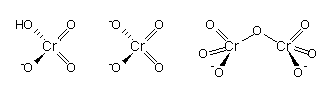
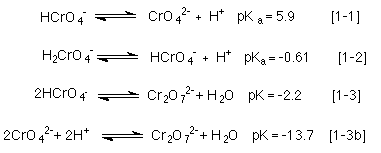
2O72-, chromate, CrO42-, and hydrogen chromate, HCrO4- (Figure 1-2) (1, 3, 19, 30). Most studies in the literature seem to favor the dominant species' dependence on the pH and concentration of the solution, with chromate predominant in basic solutions, hydrogen chromate and dichromate in equilibrium at pH 2-6, and H2CrO4 predominant at pH < 1 (Equations 1-1 to 1-3 and Figure 1-3) (1, 30). However, it should be noted that relatively recent work involving Raman spectroscopy has failed to reveal spectra that would confirm the existence of hydrogen chromate in aqueous solutions (31, 32). As a result, those authors have proposed a simple equilibrium between chromate and dichromate in the pH range 1-11 (Equation 1-3b). Confirmation of the Raman spectroscopic studies by other methods will be necessary to completely rule out hydrogen chromate as a viable species.
Figure 1-2. Structures of hydrogen chromate, HCrO
1.3.1. Reduction of Chromium(VI)
Chromium(VI) has a reduction potential in acidic solutions (pH = 0) of +1.33 V (Equation 1-4), and in basic solutions (pH = 14) of -0.12 V (Equation 1-5); thus, it is a much better oxidant under acidic conditions than under basic conditions (1, 19).
Figure 1-3. Diagram showing the predominant chromium(VI) species in aqueous solution at 25 °C and I = 1 M.
Cr
2O72- + 14H+ + 6e- = 2Cr3+ + 7H2O E° = +1.33 V [1-4]CrO
42- + 4H2O + 3e- = Cr(OH)3 + 5OH- E° = -0.12 V [1-5]At physiological pH, 7.4, the potentials (E°
') of half-reactions [1-4] and [1-5] (extrapolated using the Nernst equation) are +0.34 V and +0.52 V respectively (19). It is clear that chromium(VI) is a much milder oxidant under neutral conditions than under acidic conditions, but one must realize that these potentials are only approximations of chromium(VI) redox potentials in biological systems, since the final products in vivo will probably be chromium(III) complexes with cellular components, and not simply hexaquochromium(III) or Cr(OH)3 (19). However, thermodynamic considerations alone are insufficient to determine the fate of chromium(VI) within cellular systems. It has been shown that kinetic factors play a major role in the reduction of chromium(VI) within cells (21). Specifically, in vitro experiments have shown that the reduction of chromium(VI) by low molecular weight reducing agents is kinetically controlled, and there are a number of cases, e.g., isocitrate and xanthine, which have adequate redox potentials at pH 7.4 (E°' = -0.38 V and -0.36 V respectively) to reduce chromium(VI), but which do so at insignificant rates (21). In contrast, other low molecular weight reductants with similar redox potentials to xanthine and isocitrate, e.g., cysteine and glutathione, reduce chromium(VI) at significant rates (19, 21). Further convincing evidence for kinetic control of reduction of chromium(VI) is given by the fact that while ascorbate (E°' = +0.08 V) rapidly reduces chromate, oxalate (E°' = -0.9 V) does not at physiological pH (21).1.3.1.1. Cysteine and other thiols
The reaction between cysteine (see Table 1-1 for structure)
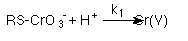
, and chromium(VI) has been studied in perchloric acid solutions in the pH range 1-1.7 (19, 33), and the following reaction mechanism proposed: [1-6]
[1-6]
 [1-7]
[1-7]
 [1-8]
[1-8]
Equation [1-6] shows the formation of a transient orange chromate-thioester complex (K
1 = 1030 + 110 M-1), which can then be reduced to Cr(V) (Eq. [1-7], k1 = 9.4 x 10⁻² M-1s-1) or Cr(IV) (Eq. [1-8], k2 = 1.2 x 10⁻² M-1s-1). The kinetic data were interpreted in terms of [HCrO4-] being the sole reactant chromium(VI) species since ca. 91% of chromium(VI) exists as [HCrO4-] under the conditions employed, i.e., protonation of hydrogen chromate or dimerisation to dichromate is negligible under the conditions employed (33). The mechanism ([1-6] to [1-8]) and the kinetic data led to the following rate law in acidic media (33):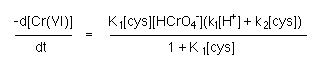 [1-9]
[1-9]
It has also been shown that thiols reduce chromium(VI) at pH = 7.4, and 25 °C, and generally show second order kinetics (19, 21) (Table 1-1). Thus, the reduction of chromate by cysteine (and other thiols) can be considered to generally follow a second order rate law as shown in equation [1-10], if [H
+] is small and K1 is large: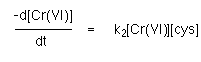 [1-10]
1.3.1.2. Metals
The reduction of chromium(VI) by metals generally occurs in a series of steps, and the kinetic expressions describing these steps are often complicated. This stems from the fact that in contrast to the 3e
- net reduction of chromium(VI), i.e., Cr(VI) + 3e- Æ Cr(III), most low oxidation state transition metals undergo 1e- oxidations, i.e., Mn+ - 1e- Æ M(n+1)+ (34). Typically, the presence of one or more reaction intermediates, i.e., chromium(V) or chromium(IV), can be inferred from analysis of the kinetic data, or can be directly detected via spectroscopy.The conversion of tetrahedral chromium(VI) (Figure 1-2) to octahedral chromium(III) (as Cr(H
2O)63+) converts an oxoanion to a hydrated cation, thus the net reaction consumes protons. One can easily see why the rates of many of these reactions are increased in acidic environments (34).An overall reaction scheme for the reduction of chromium(VI) by metal ions is shown in equations [1-11 to 1-13]:
 [1-11]
 [1-12]
 [1-13]
In most cases the reduction of Cr(V) to Cr(IV) ( [1-12]; k
2) is rate determining, and equations [1-11 to 1-13] lead to the following general rate law [1-14](34):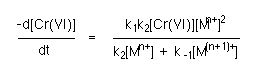 [1-14]
Table 1-
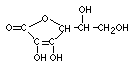
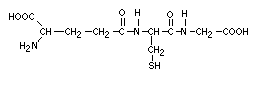
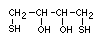
1. Reduction potentials, structures, and second order rate constants (pH 7.4 and 25 °C) for the reactions between chromate and a number of thiols, dithiols, and ascorbate (19, 21, 35-37).Table 1-1.
Reduction potentials and structures of a number of thiols, dithiols, and ascorbate, and second order rate constants (pH 7.4 and 25 °C) for the reactions with chromate.|
Reductant |
Structure |
Reduction Potential E° ' (V)* |
Second Order Rate Constant (M-1min-1) *,bFor reaction with CrO 42- |
|
Cysteine |
|
-0.32 a |
75.3 + 6.2 |
|
Ascorbic Acid |
|
+0.08 a |
36.1 + 1.2 |
|
Glutathione |
|
-0.23 a |
>26 |
|
Dithiothreitol |
|
-0.332 c |
17.3 + 1.8 |
|
b -Mercaptoethanol |
|
-0.320 d |
5.4 + 0.2 |
|
2,3-Dimercaptosuccinic Acid |
|
-0.505 e |
3.8 + 0.2 |
|
Thiolactic Acid |
|
n.d. f |
3.1 + 0.2 |
*1 M Tris-HCl buffer, at pH = 7.4 and 25 °C;
aFrom reference (21); bFrom (19); cFrom (35), pH = 7.0; dFrom (36), pH = 7.0 at 30 °C; eFrom (37); fNo data (a value for this potential was not found in the literature).1.3.1.2.1 Iron(II)
The overall reduction of chromium(VI) by ferrous iron is shown in equation [1-15] (38):
Cr(VI) + 3Fe(II)
Æ Cr(III) + 3Fe(III) [1-15]and the redox potential of ferrous iron (Equation [1-16] and Table 1-2):
Fe(III) + e
- Æ Fe(II) E° = +0.77 V [1-16]is adequate for the reduction of hydrogen chromate (see Equation [1-5]).
An expression for the rate of reduction of hydrogen chromate by hexaaquoiron(II) has been determined (34) (Equation [1-17]):
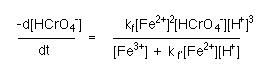 [1-17]
and this rate law is consistent with the following reaction mechanism (34) (Equations [1-18 and 1-19]):
 [1-18]
 [1-19]
where k
f = k1fk2f/k-1f and kf' = k2f/k-1f, assuming steady-state behavior for the Fe(III) and Cr(V) intermediates. The rate limiting step in this reaction scheme is the reduction of the chromium(V) intermediate to chromium(IV) (Equation [1-19]), presumably due to the change in coordination number from 4 to 6 during this step.1.3.1.2.2 Vanadium(III) and Vanadium(IV)
In contrast to reduction by Fe(II), the reduction of chromium(VI) by vanadium (as either V
3+ or VO2+) proceeds independently of [H+]. Specifically, rate laws have been derived (34) (Equations [1-20] and [1-21]):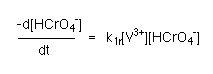 [1-20]
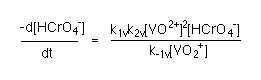 [1-21]
and the overall rate law (for mixtures of V
3+ and VO2+) (Equation [1-22]):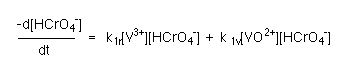 [1-22]
that is consistent with the reaction mechanism outlined in Equations [1-23] to [1-27] (34). Specifically, VO
2+ in effect catalyzes reaction [1-23] by generating chromium(V) in reaction [1-26], resulting in the overall rate given by [1-22]: [1-23]
 [1-24]
 [1-25]
 [1-26]
 [1-27]
1.3.1.2.3 Arsenic(III)
Ghosh and Gould (39) have recently studied the reaction of chromium(VI) with arsenic(III) (as H
3AsO3, typically a 2e- reductant) in 2-ethyl-2-hydroxybutanoate buffers at low pH. Such buffers are known to stabilize intermediate oxidation states of chromium(VI), and in this instance were used to stabilize any chromium(IV) formed. With As(III) in excess the stoichiometry as outlined in Equation [1-28] is observed,Cr(VI) + As(III)
Æ Cr(IV) + As(V) [1-28]but with Cr(VI) in excess a more complicated reaction mechanism is involved, and any Cr(IV) formed is subsequently oxidized by Cr(VI), leading to the stoichiometry as outlined in Equation [1-29]:
2Cr(VI) + As(III)
Æ 2Cr(V) + As(V) [1-29]In the absence of stabilizing ligand the stoichiometry shown in Equation [1-30] is observed (39):
2Cr(VI) + 3As(III)
Æ 2Cr(III) + 3As(V) [1-30]It should be noted that carboxylate-stabilized Cr(IV) formed in the above reactions does not react further with excess As(III) (39).
1.3.1.2.4 Molybdenum(IV)
The overall reaction of Mo(IV) (as Mo(CN)
84-) and Cr(VI) in aqueous solution is shown in Equation [1-31] (40):3Mo(CN)
84- + Cr(VI) Æ Cr(III) + 3Mo(CN)83- [1-31]A rate law for this reaction has been determined (40) and is shown in Equation [1-32]:
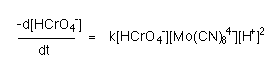 [1-32]
where k = (8.8 + 1.5) x 10
-4 M-3 sec-1 (40). Unlike other 1e- reductants such as Fe(II), the reduction of Cr(VI) to Cr(V) (see Equation [1-11]) appears to be the rate determining step in this reaction (Equation [1-33]):HCrO
4- + Mo(CN)84- + 2H+ Æ H3CrO4 + Mo(CN)83- [1-33]Finally, recent work by Ghosh and Gould (41) has involved the reduction of chromium(VI) by a dimeric molybdenum(V) cation (Figure 1-4) in a stabilizing buffer of 2-ethyl-2-hydroxybutanoate at low pH. This reduction follows a number of pathways, depending on which reagent is in excess. With excess (Mo(V))
2, the net stoichiometry in Equation [1-34] is observed,2Cr(VI) + 3(Mo(V))
2 Æ 2Cr(III) + 6Mo(VI) [1-34]while with chromium(VI) in excess, Equation [1-35] outlines the net reaction:
2Cr(VI) + (Mo(V))
2 Æ 2Cr(V) + 2Mo(IV) [1-35]Both reactions [1-34] and [1-35] go through a chromium(IV) intermediate as shown in Equation [1-36]:
Cr(VI) + (Mo(V))
2 Æ Cr(IV) + 2Mo(VI) [1-36]The intermediate Cr(IV) formed in reaction [1-36] is then either oxidized to Cr(V) by Cr(VI) or reduced to Cr(III) by (Mo(V))
2 depending on the reagent in excess and resulting in the net stoichiometries shown (41).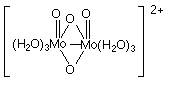
Figure 1-
4. Structure of dimeric molybdenum(V) cation used by Ghosh and Gould for the reduction of chromium(VI) in aqueous solutions (41).Table 1-2. Reduction potentials for various metal ions discussed in the text (42).
|
Half-Reaction |
E°, V a |
|
Fe 3+ + e- Æ Fe2+ |
+0.77 |
|
VO 2+ + 2H+ + e- Æ VO2+ + H2O |
+1.00 |
|
VO 2+ + 2H+ + e- Æ V3+ + H2O |
+0.33 |
|
H 3AsO4 + 2H+ + 2e- Æ HAsO2 + 2H2O |
+0.56 |
|
Mo(CN) 83- + e- Æ Mo(CN)84- |
+0.725 b |
|
2H 2MoO4 + 2e- + 4H+ Æ Mo2O42+ + 4H2O |
+0.5 |
|
Ce 4+ +e- Æ Ce3+ |
+1.72 |
|
Pr 4+ +e- Æ Pr3+ |
+3.2 |
|
Tb 4+ +e- Æ Tb3+ |
+3.1 |
|
TiO 2+ +2H+ +e- Æ Ti3+ + H2O |
+0.1 |
|
VO 2+ + 4H+ + e- Æ V4+ + 2H2O |
+0.38 |
a
25 °C, acid solution; bNeutral pH1.4. Chromium(V), d1
For many years chromium(V) was proposed as an intermediate in the reduction of chromium(VI) (43), but the highly reactive and unstable nature of chromium(V) species made direct evidence of their existence difficult to obtain. In the past 20 years, however, the general availability of electron paramagnetic resonance (EPR) spectrometers has allowed researchers to directly detect (and thus prove the existence of) chromium(V) species (44).
To date, over 25 chromium(V)-containing compounds have been characterized (44, 45), but only a handful of these are stable in air or in aqueous solution (most will disproportionate to chromium(III) and chromium(VI) in aqueous solution) (45). Of those handful of chromium(V) complexes that are stable in aqueous solution, the chromium(V) chelates of tertiary hydroxy acids, of the general structure shown in Figure 1-5 have been studied extensively (45, 46). The relatively simple preparation of these complexes, as well as their stability in aqueous solution has made them very attractive for mechanistic studies of reactions involving this oxidation state of chromium (45). The most commonly used and most stable chelate is a complex involving the 2-ethyl-2-hydroxybutyrato ligand (EHBA), [Cr(V)(EHBA)
2O] and is shown in Figure 1-5 (45, 46).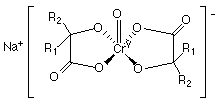
Figure 1-5. Structure of chromium(V) chelate of tertiary hydroxy acids. Sodium bis(2-ethyl-2-hydroxybutyrato)oxochromate(V) ([Cr(V)(EHBA)
1.4.1. Electron Paramagnetic Resonance
EPR spectroscopy is a powerful tool used to study species with unpaired electrons. Chromium(V) has one unpaired d
1 electron, and EPR can give information concerning the symmetry of chromium(V) species, as well the ligands bound to the paramagnetic center. One of the most important quantities one can derive from an EPR spectrum is the value of the "g-factor". This "g-factor" is a physical constant, and for a free electron ge is 2.00232. When an external magnetic field (Hr) is applied to a sample, this g-factor is allowed to vary (47):
where h = Planck's constant,
n is the spectrometer frequency, b is the Bohr magneton, and Hr is the applied magnetic field. One can use this g-factor (geff) as an aid in identifying an unknown species. The main reason for the variation in g-values with the magnetic field is the mixing of excited and ground states due to spin-orbit coupling of the electron spin and orbital angular momentum, characterized by the spin-orbit coupling constant, l. In the d1 chromium(V) system, l > 0, so geff is generally less than ge (47). The mixing of excited states usually depends on the orientation of the sample in the magnetic field, so g-values are anisotropic. The anisotropy of the g-value is usually represented by a g tensor (47). There are three principal values of this tensor: gx, gy, and gz. The symmetry of the paramagnetic species dictates whether some or all of these principal values are equivalent. By doing EPR studies at 77 K, one can get information about the symmetry of the paramagnetic species; g-values are anisotropic since all orientations of the molecule with respect to the magnetic field are represented. However, this also leads to broad lines in the spectrum since geff is spread across a wider range of Hr.If a molecule has perfect octahedral, tetrahedral or cubic symmetry, then all the principal values of the g tensor are equivalent, g
x = gy = gz, and an isotropic signal is observed (Figure 1-6A). If the molecule has axial symmetry, i.e., square pyramidal, then gx = gy gz (Figure 1-6B). In such cases one normally refers to the g-value parallel to the axis of symmetry as g//, i.e., gz and to the other two values as g^, i.e., gx = gy. It should be noted that the position of the g// signal is dependent on the spin-orbit coupling constant, l, between the chromium(V) center and the equatorial ligand(s). For those species with high l, g// > g^, and a signal similar to Figure 1-6B is observed. However, in the case of low l, then g// < g^, and the signal observed is reversed from Figure 1-6B. For a molecule having no three-fold (or higher) axis of symmetry, then gx gy gz and a rhombic signal is observed (Figure 1-6C). Note that paramagnetic species in solution, i.e., 297 K, usually show only a single isotropic g-value, gav, due to tumbling of the molecule which averages out the anisotropy:gav = 1/3(gx + gy + gz).1.4.2. Reduction of Chromium(V)
1.4.2.1. Metals
1.4.2.1.1 Polyvalent metal ions
La3+, Pr3+, Gd3+, Tb3+, Al3+, and Ce3+, in acetate buffered solutions (pH 3-5) and 25 °C, promote the disproportionation of chromium(V) chelates of the form shown in Figure 1-5 (Reaction [1-37]) (45):
3Cr(V)
Æ 2Cr(VI) + Cr(III) [1-37]Of such polyvalent metal ions, the most effective is Ce
3+; reduction of chromium(VI) to chromium(V) [1-11] is increased 100-fold by this ion, vs. 3-5 fold for the others (45). For Ce3+, the rate of reaction [1-37] is proportional to 1/[Ligand] (where Ligand = 2-ethyl-2-hydroxybutyrate, EHBA). This indicates that prior to the rate determining step([1-39]), rapid and reversible loss of carboxylato ligand from the chromium(V) complex occurs ([1-38]) (45):Figure 1-6. Computer-generated (see program EPRsim, Appendix A) representative 77K EPR spectra for chromium(V) complexes with various structural differences. (A) For a complex having spherical or cubic symmetry, i.e., undistorted
*
Note that CrO43- does not normally possess perfect cubic symmetry, but is a slightly distorted tetrahedron due to the Jahn-Teller effect (which requires molecules to adopt geometries that do not lead to a degeneracy in valence level orbitals (1) ), and this distortion manifests itself by an axial signal with g// < g^ (48).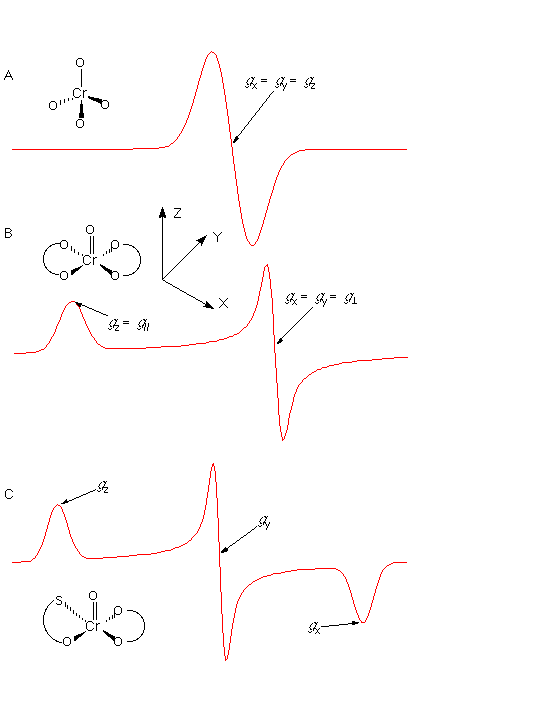
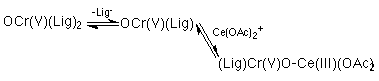 [1-38]
(Lig)Cr(V)O-Ce(III)(OAc)
2 Æ LigCr(IV)O + Ce(IV)(O)(OAc)2 [1-39]1.4.2.1.2 Titanium(III)
In contrast to the above polyvalent metals, Ti(III) serves as a single electron reductant, and its reaction with chromium(V) (aqueous solution at low pH,
m = 0.5 M, 25 °C), results in the reduction of chromium(V) to chromium(III) without disproportionation (45, 49) (Reaction [1-40]).[Cr(V)(EHBA)
2O]- + 2Ti(III) Æ [Cr(III)(EHBA)2(H2O)2]+ + 2Ti(IV) [1-40]Since reaction with Ti(III) is not hindered by excess ligand (it is actually accelerated), the loss of chelating ligand prior to reduction is not necessary in this case. The 1e
- reduction of chromium(V) should, in principle, form chromium(IV); the failure to detect such a species in this system indicates that any chromium(IV) formed is much more reactive towards the reductant than the parent chromium(V) chelate (45). It has been estimated (49) that the rate of reaction of chromium(IV) with Ti(III) must be 20 times faster than the corresponding chromium(V) reaction in order for chromium(IV) to be undetected. The proposed structure of the final chromium(III) product of reaction [1-40] is shown in Figure 1-7. Thus, it can be assumed that the ligand connectivity about chromium has been conserved (45, 49).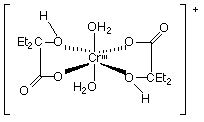
Figure 1-7. Proposed structure of the final chromium(III) species produced by the reduction of [Cr(V)(EHBA)
1.4.2.1.3 Iron(II), Vanadium(IV)
Similar to reduction by Ti(III), reduction of chromium(V) by Fe(II) or V(IV) (as VO
2+) is a 1e- process and the stoichiometry with ligand in excess is the same as for the Ti(III) reaction. The resulting chromium(III) products are similar to that shown in Figure 1-7, and the reactions are again accelerated by excess carboxylato ligand, (EHBA) (45, 50). In contrast to reduction by Ti(III), the intermediate chromium(IV) is observed in these systems. The formation and decay of the chromium(IV) intermediate (as detected by a strongly absorbing transient species, lmax = 515 nm, e = 1.5 x 10³ M-1cm-1 (Fe(II) reaction); e = 1.6 x 10³ M-1cm-1 (V(IV) reaction)) depends on the concentration of reactants. With Fe(II) or V(IV) in excess, the chromium(IV) intermediate is rapidly formed, and is also rapidly reduced by Fe(II) or V(IV). With Cr(V) in excess, rapid formation of the intermediate is observed, with subsequent slow disproportionation (50, 51). In the Fe(II) reaction, two paths are proposed for the formation of the chromium(IV) intermediate. In one, a transition state consists of Fe(II) and Cr(V) with one alkoxyl proton removed while in the other the transition state consists of Fe(II), Cr(V) and Lig- (where Lig- is an additional carboxylato ligand, 2-ethyl-2-hydroxybutyrate, (EHBA)) (45, 50). The latter is assumed to be derived from attack of the chromium(V) chelate by a FeLig+ complex (45, 50). Subsequent reduction of the chromium(IV) intermediate with Fe(II) in excess goes at a specific rate of 2.7 x 10⁴ M-1s-1 (45).The reaction between V(IV) and Cr(V) is more complicated, since a third (minor) component pathway is indicated (45, 51). The reduction of Cr(V) (as [Cr(V)(EHBA)
2O]-) by V(IV) is outlined in Equations [1-41] to [1-43] (where Lig- is the carboxylato ligand, EHBA) (45):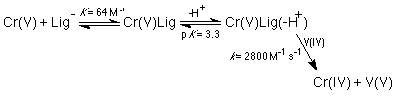 [1-41]
 [1-42]
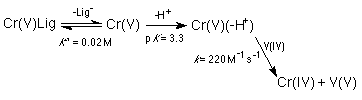 [1-43]
Equations [1-41 and 1-43] show the formation of chromium(IV) intermediates. Equation [1-41] involves the "extraligation" of the initial chromium(V) chelate by another carboxylato ligand (45). Equation [1-43] initially shows the loss of this "extraligated" carboxylato ligand, and subsequently shows the reduction of the chromium(V) chelate [Cr(V)(EHBA)
2O]-; this pathway is not observed in reductions involving Fe(II) (45, 50, 51).1.4.2.1.4 Uranium(IV)
The reduction of chromium(V) by uranium(IV) proceeds by a mechanism similar to Fe(II), and involves a 1:1 stoichiometry. The final chromium(III) product observed in this system is the same as that for 1e- metal ion reductants (Figure 1-7). The pathways are outlined in Equations [1-44] and [1-45] (45, 52):
 [1-44]
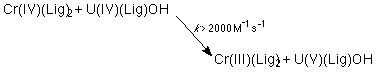 [1-45]
where (Lig) is the carboxylato ligand, (EHBA), U(IV)(Lig)OH is a uranium(IV) species that has taken on an extra ligand, but lost a proton, and Cr(V)(Lig)
2 is the chromium(V) chelate [Cr(V)(EHBA)2O]- (Figure 1-5) (45). Note that the reduction of Cr(IV) ([1-45]) in this system is over 10 times faster than the initial reduction of Cr(V). In this respect the reduction of chromium(V) by uranium(IV) is similar to the reduction by titanium(III), and Gould has noted (45) that it is consistent with the assignment of an "outer-space" (sic) (outer-sphere) path for the uranium(IV) reaction.1.4.2.1.5 Summary
Table 1-3 summarizes some of the mechanistic features of the reduction of chromium(V) by metals, and shows that among the five entries there is considerable selectivity among ligation and protonation levels of the chromium(V) oxidant. The rates of reduction of chromium(V) by the various metal species is shown to vary over three orders of magnitude (45).
Table 1-3. Reduction of chromium(V) chelate [Cr(V)(EHBA)
2O]- by various metal ions in aqueous media, pH 2-4. Lig = 2-ethyl-2-hydroxybutyrate, (EHBA). Table modified from reference (45).|
Reductant |
n a |
Main reactive oxidizing species b |
Rate |
Reference |
|
Ce(III) c |
1 |
Cr VO(Lig)(-H+)d |
- |
(45) |
|
Ti(III) |
1 |
Cr VO(Lig)2-e |
5 x 10 5 M-1 s-1f |
(49) |
|
Fe(II) |
1 |
Cr VO(Lig)2(-H+)2-g |
2.7 x 10 4 M-1 s-1h |
(50) |
|
V(IV) |
1 |
Cr VO(Lig)32-i |
2.3 x 10 4 M-1 s-1j |
(51) |
|
U(IV) |
1 |
Cr VO(Lig)2-e |
1.9 x 10 2 M-1 s-1k |
(52) |
a
Number of electrons in initial electron transfer. b(Lig) = 2-ethyl-2-hydroxybutyrate. cCatalyzes the disproportionation of Cr(V) to Cr(VI) and Cr(III). dInitial Cr(V) chelate (Figure 1-5) which has lost both a ligand and a proton. eInitial Cr(V) chelate (Figure 1-5). fFor reaction with TiIII(OH), pH = 1, 23°C, m = 0.5 M; gInitial Cr(V) chelate (Figure 1-5) in which one of the carboxylato ligands has been deprotonated; h21°C, m = 0.5 M, the reaction is independent of acidity and ligand concentration in the pH range 2-4; i"Extraligated" Cr(V) chelate; j[V(IV)] = 2.18 mM, [Cr(V)] = 0.25 mM, 21 °C, m = 1.0 M; k21 °C, m = 0.5 M.1.4.2.2. Thiols
Ghosh et al. (53) have studied the reduction of the chromium(V) chelate [Cr(V)(EHBA)
2O]- by the mercapto acids cysteine and thiolactic acid (See Table 1-1 for structures of these thiols). The net reduction in aqueous solution, buffered with 2-ethyl-2-hydroxybutyrate, by either of these two thiols is outlined in Equation [1-46]:Cr(V) + 2RSH
Æ RSSR + Cr(III) + 2H+ [1-46]The mechanism for the reduction is a multi-step process involving an intermediate Cr(IV) species and thiyl radical (Equations [1-45] to [1-49]):
Cr(V) + RSH
Æ Cr(IV) + RS• + H+ (k1) [1-47]Cr(V) + RS•
Æ Cr(IV) + RS+ (k2) [1-48]Cr(IV) + RSH
Æ Cr(III) + RS• + H+ (k3) [1-49]Cr(IV) + RS•
Æ Cr(III) + RS+ (k4) [1-50]RS
+ + RSH Æ RS-SR + H+ (fast) [1-51]A particularly interesting point of this mechanism is that in the early stages, [1-47] and [1-48] predominate, but as the [Cr(IV)] increases, [1-49] becomes more prominent and [RS•] rises (53). The thiyl radical reacts much more rapidly with Cr(V) ([1-48]) than with Cr(IV) ([1-50]); since [1-48] generates more Cr(IV), autocatalysis is observed (53).
It is interesting to note that k
1 ([1-47]) actually decreases at higher thiol concentrations, indicating the reversible formation of a Cr(V)-thiolactate species (53). It has been suggested that it is this Cr(V)-thiolactate species that undergoes subsequent reduction to Cr(IV) (53). In contrast, no kinetic saturation occurs with reduction by cysteine in [1-47], probably because cysteine is a weaker complexing species due to the positive charge (NH3+) on this reductant (53). It has been suggested that for the thiols under consideration the Cr(V)-thiol reaction ([1-47]) proceeds via an inner-sphere mechanism (53). Partial evidence for this suggestion comes from comparison to an analogous reaction involving IrCl63- as the reductant, which proceeds at rates 100-1000x slower than with cysteine and thiolactic acid (respectively) acting as the reductant (53).1.5. Goals of this Research
The overall goal of this research has been to illuminate the possible fate of chromium(VI) and chromium(V) in biological systems, by studying in vitro reactions of chromium(VI) and chromium(V) with low molecular weight biological and model reductants, as a means of more fully understanding the processes involved in the genotoxicity of chromium. Toward this end, the main focus of this research has been the study of chromium(V) complexes and other reactive intermediates formed during reactions of chromium with thiols and other reducing agents such as ascorbate. The main tool for this study has been Electron Paramagnetic Resonance Spectroscopy.
Reduction of chromium(VI) complexes by a number of reducing agents has been studied by the EPR method. The chromium(V), and to a lesser extent the chromium(III), species formed during the reduction of chromium(VI) have been studied in an attempt to further our understanding of the possible biological effects of cellular chromium(VI) metabolism. Principally the reduction of chromium(VI) by four thiols, i.e.,
b-mercaptoethanol, dithiothreitol, glutathione, and cysteine, has been studied in some detail. Other reactive intermediates such as hydroxyl radical, •OH, or thiyl radical, RS•, formed during the reduction of chromium(VI) have also been studied, and their role in the fate of chromium species produced is discussed.In addition to the studies involving the reduction of chromium(VI), studies involving chromium(V) as the initial chromium oxidation state have been performed. This work has mainly focused on the reactions of the bis-chelated chromium(V) species, [Cr(V)(EHBA)
2O]- (Figure 1-5) with various reducing agents, i.e., b-mercaptoethanol, dithiothreitol, glutathione, oxidized glutathione, glycine, oxalic acid, ascorbic acid, and thiolglycolic acid. Both redox and ligand substitution reactions with this starting complex were studied by the EPR method.