Sun 8 Jan 2017
Prof Bob Brier Seminar on Ancient Egypt
Posted by boz under Archaeology , General , HistoryComments Off on Prof Bob Brier Seminar on Ancient Egypt
On Saturday I attended Prof. Bob Brier’s talk at the Smithsonian Ripley Center ( A Smithsonian Resident Associates talk):
Temples, Monuments, and Tombs: Exploring Egypt’s Ancient Treasures
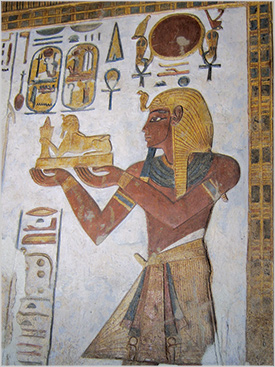 This was a great day of archaeology lectures!
I had planned to take the Metro into Washington, D.C., but was running late (shocker!), so drove in. No spots on Jefferson Ave in front of the S. Dillon Ripley Center (sometimes I get lucky), so I parked at a meter at the end of the Mall (on 7th). That was actually convenient, as you can use an app on your phone to pay the meter, so I just renewed my spot every 2 hours on my phone without having to go back to feed the meter. Nice.
I arrived just a few minutes after it started. I assumed walking in that I would have a crappy seat (it was a sold out event), but there were some free chairs along the side of the upper balcony in the auditorium – unobstructed view, and no one crowding. Nice! I had been to a previous lecture of Prof. Brier’s, about 6 years ago, for the release of his book, “The Secrets of the Great Pyramid”, so I knew I would like the presentation. He is a great lecturer; dynamic speaker and he keeps your interest.
In anticipation of this seminar I have also started watching his Great Courses series, The History of Ancient Egypt. Wow. Wonderful course. I’m going to have Preston watch a lecture or two with me; I think he will enjoy this.
Normally in these day-long Smithsonian symposiums you get a break for lunch and have to fend for yourself. This time, however, they included a catered, box lunch. I chose the smoked turkey sandwich (lettuce and bacon too!). Quite yummy, with a nice side of rustic red potato salad and also fresh fruit cup. I saved the brownie. I hope this box lunch is a new trend – much better than having to run around and find lunch. I found an empty classroom and had a relaxing lunch and read a few articles in the latest Nature.
After the symposium, it was only a little after 4 and I had time on the meter – so I went to the National Gallery of Art (West) for an hour. Heck, I had parked almost right in front of it! That was a nice little tour. Wish I had more time, but they close at 5. My iPhone takes some surprisingly good pictures of the artwork; lots of new wallpaper for my phone now. :)
Not much traffic on way home, so just a great day. Would have been perfect if it hadn’t been 23 degrees out. Dusting of snow made it look nice, though. :)
Anyway, below is the syllabus from the website. He followed this pretty closely.
All-Day Program
Saturday, January 7, 2017 – 9:30 a.m. to 4:00 p.m.
Ancient Egypt was a major Mediterranean civilization, existing for almost 30 centuries. Its culture was one of architectural innovation and artistic beauty, governed by rich religious traditions. Egyptologist Bob Brier, an expert in pyramids, tombs, and mummies, explores its timeless heritage in a day-long examination of Egypt’s spectacular historic sites, from the Giza Plateau to the Philae Temple.
9:30–10:45 a.m. Pyramids
Among the largest structures on earth, pyramids served as royal funerary structures filled with riches for the afterlife. Examine the Great Pyramid and those in Cairo, the Giza plateau, and locations in Saqqara and Dahshur.
11 a.m.–12:15 p.m. From Karnak to the Ramesseum
Karnak is the world’s second-largest religious site with more than 30 pharaohs contributing to its complex of temples. The Luxor Temples are known as the site where kings might have been crowned. Mortuary temples on the west bank include those of Hatshepsut (Deir el Bahri), Ramses the Great (the Ramesseum), and Ramses III (Medinet Habu).
12:15–1:15 p.m. Lunch (box lunch provided)
1:15–2:30 p.m. The West Bank of the Nile
The Valley of the Kings is the mortuary area where many pharaohs, their families, and powerful nobles are buried. The most famous is Tutankhamen’s tomb, and a recent theory suggesting that Queen Nefertiti is buried behind one of its walls sparked new searches for secret chambers.
2:45–4 p.m. The Jewel of the Nile and Abu Simbel
Philae Temple, known as the “Jewel of the Nile†was built by Greek rulers of Egypt. Abu Simbel, the massive temple of Ramses II carved into a mountain, was an inspiration for Mount Rushmore.
World Art History Certificate elective: Earn 1 credit

 Last Saturday I went to an all-day symposium, “Under Cover of Darkness: The Meaning of Night in Ancient Mesoamerica” sponsored by the